
Blog
Baby laundry detergent: how to choose it and how to wash your clothes (2026)

Babies' skin is thinner and more delicate than that of an adult, and their clothes are in contact with it many hours a day. That's why it's normal to wonder what kind of products they should use to care for their skin. baby laundry detergent How to choose and how to wash it.
In this guide, we tell you what to look for on the detergent label and how to wash bodysuits, pajamas, and sleepsuits so that they stay clean and free of residue.
What to look for in a baby detergent
You don't need a «special» detergent, but it's worth reading the label. Look for:
- Perfume: If your baby has sensitive skin, choose a fragrance-free formula. The label should indicate the allergens in the fragrance it contains.
- Pictograms and danger phrases: All detergents come with instructions if you need them. Read them and always keep the detergent out of the reach of children.
- Official stamps: Words like «natural,» «eco,» or «soft» on the packaging do not guarantee anything if they are not accompanied by verified certification.
- The dose: A detergent that is easy to dose helps to avoid over-washing, which is one of the most common causes of residues on clothes.
If your baby has redness, eczema or very reactive skin, consult your pediatrician before changing detergent.
How to wash baby clothes step by step
1. Wash new clothes before wearing them
New bodies, pajamas, sheets, and scarves may contain traces of dyes or factory finishes. Always wash them before first use.
2. Use the correct dose
More detergent does not wash better: what is left over gets left behind in the fabric. Use the dosage indicated on the package for the amount of laundry you are going to wash.
3. Add an extra clarification
If the washing machine allows it, activate an additional rinse cycle. This helps to prevent detergent residues from remaining on the clothes.
4. Choose gentle programs
For everyday clothing, 30–40 °C usually suffices. For nappies, towels or cloth diapers that are very dirty, you can increase the temperature according to the garment's label.
5. Better without softener
The softener leaves a layer of product on the fabrics and adds more perfume. With proper rinsing, the baby's clothes remain soft without it.
6. Dry it in the air, if you can
Drying clothes in the air and in the shade protects the fabrics. If you use a dryer, follow the instructions for each garment.
Which clothes need more care
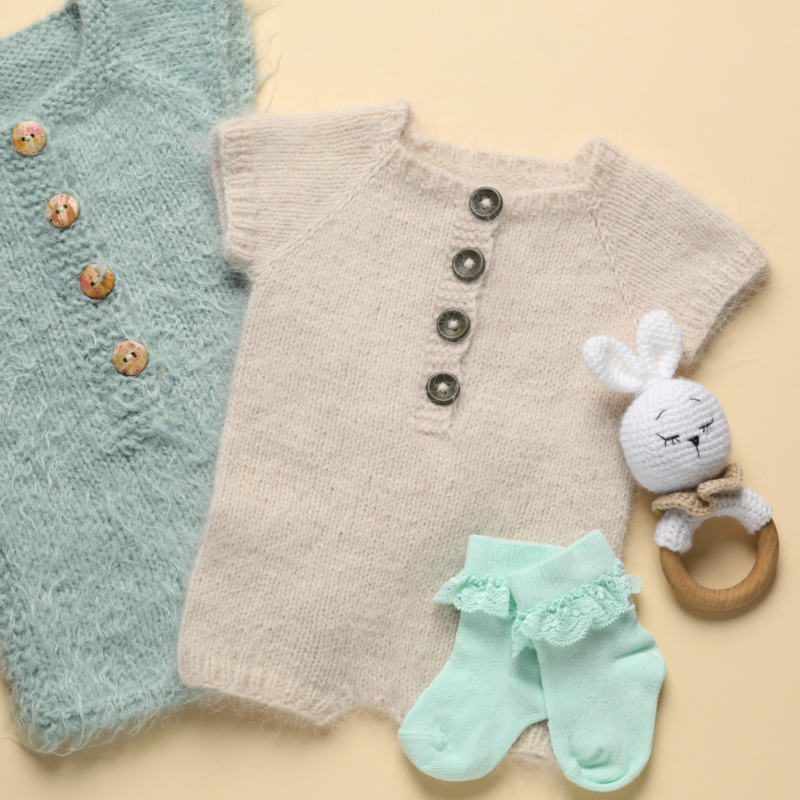
- Bodies and underwear
- Pajamas and sleeping bags
- Muselinas and bibs
- Sheets and tablecloths
- Cloth diapers
These are the garments that come into contact with the baby's skin the longest, so it's advisable to wash them with the appropriate amount of detergent and rinse them thoroughly.
Can detergent in strips for baby clothes be used?
The strip format is convenient because it is already dosed and it is difficult to go overboard with the amount. But what matters is the formula, not the format: read the label like you would with any other detergent and, if your baby has sensitive skin, choose one without perfume. If you want to know how to use it, you have our guide on how to use the detergent in strips.
Frequently Asked Questions
Which detergent is better for baby's clothes?
One that you can dose well, without perfume if your baby has sensitive skin, and always with a good cleanser. For any skin problem, consult the pediatrician.
At what temperature should baby clothes be washed?
For everyday use, 30–40 °C. For baby diapers, towels or cloth nappies that are very dirty, the temperature allowed by the garment label.
Do you have to wash the baby's clothes separately?
During the first few months, it is advisable, especially if the rest of the family uses softener or detergent with a strong fragrance.
Is it necessary to wash new clothes before wearing them?
Yes, always. This way you remove any residual dye and factory-applied pressure.