

Blog
Discover how conventional cleaning products release harmful chemicals into the air and water in your home.

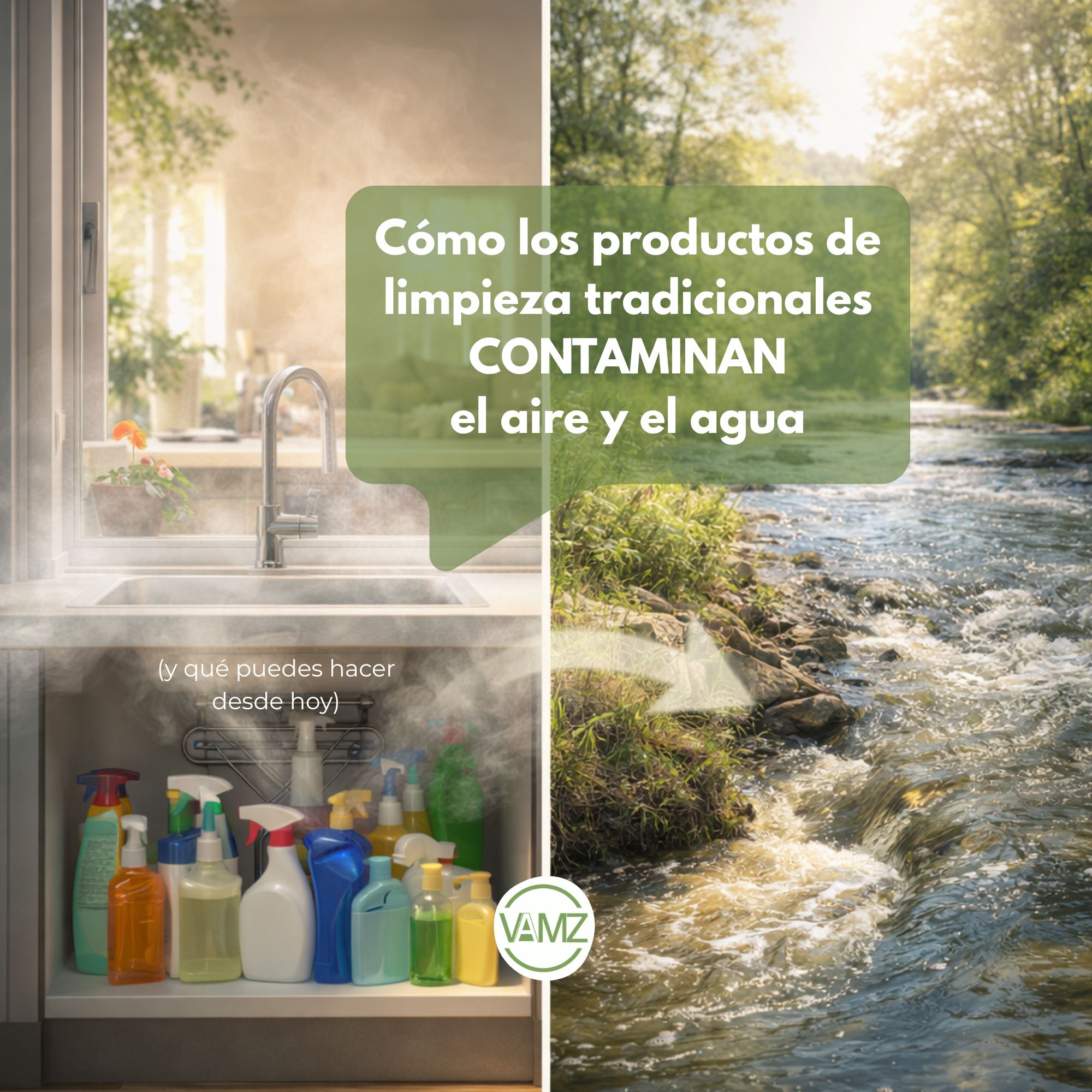
When we clean our house, we do it with good intentions: to take care of our home and those who live in it.
But what they almost never tell us is that many Traditional cleaning products not only do they clean... they also They release chemicals that contaminate the air we breathe and the water we use.
Let's explain it. step by step and with common sense, how would you explain it to someone you really care about.
What do traditional cleaning products contain?
Most conventional cleaners are formulated to act fast and smell “clean.”.
To achieve this, they usually include:
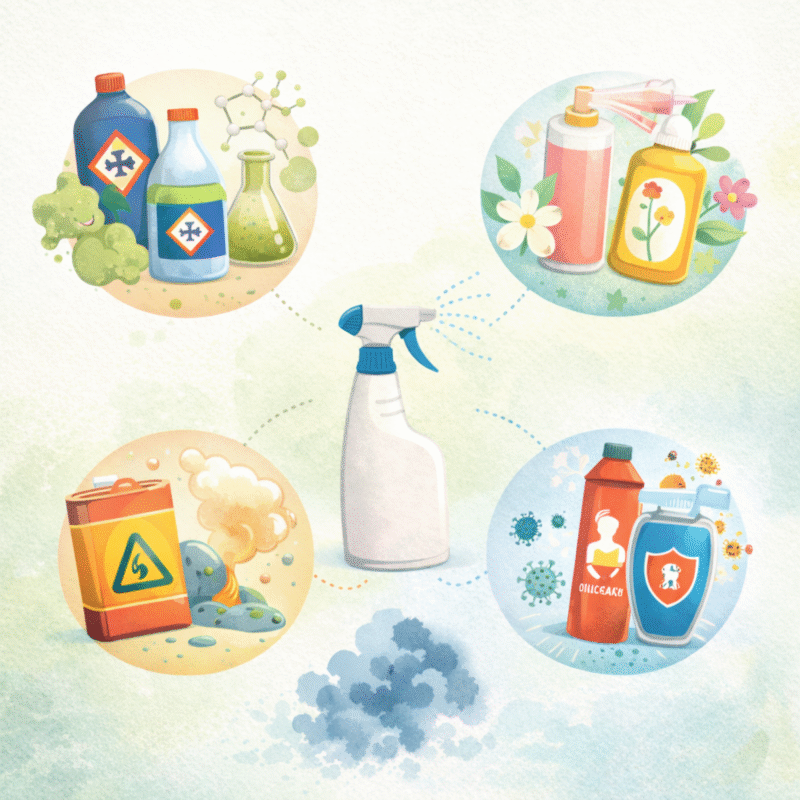
- Aggressive chemicals
- Artificial fragrances
- Solvents that evaporate easily
- Powerful disinfectants, even when they're not needed
The problem isn't just what they clean, but what they release next.
How indoor air pollution happens
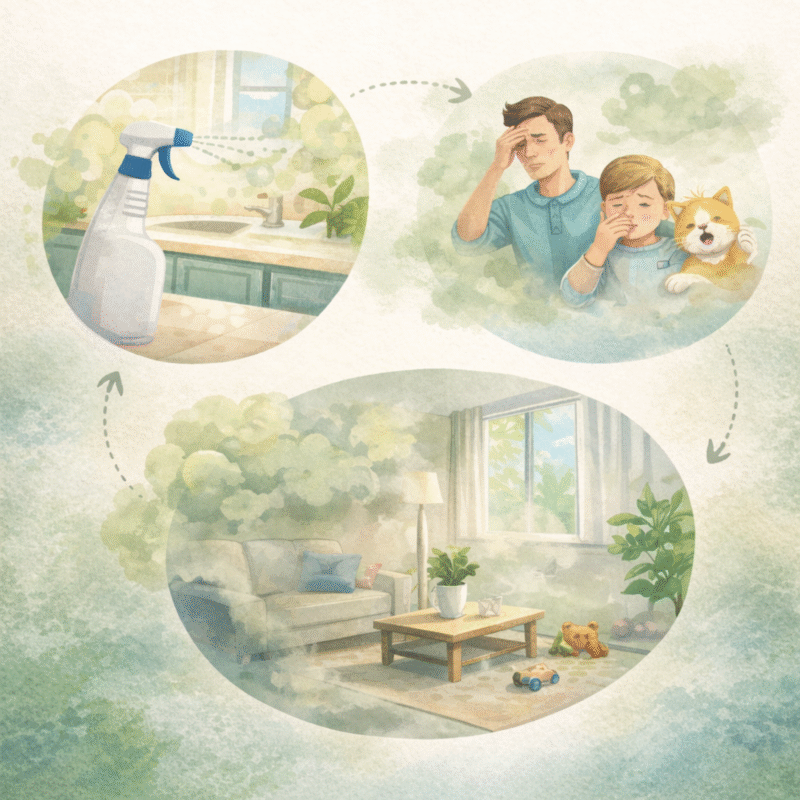
1. They evaporate without you seeing it
When you use a spray or heavily scented cleaner, some of the product It doesn't stay on the surface.
It turns into invisible gases that enter the air in your home.
These gases can linger for hours, even after you've finished cleaning.
2. You and your family breathe them
They breathe that air:
- adults
- children
- babies
- pets
That's why many people notice:
- Headache when cleaning
- Eye or throat peak
- stuffy air
- cough or irritation
It's not a coincidence or an exaggeration: it's the body reacting.
3. “Clean” air ceases to be so
Paradoxically, Cleaning with chemicals can worsen indoor air quality, which often already is more polluted than the outside air.
How they pollute water (even if it doesn't seem like it)
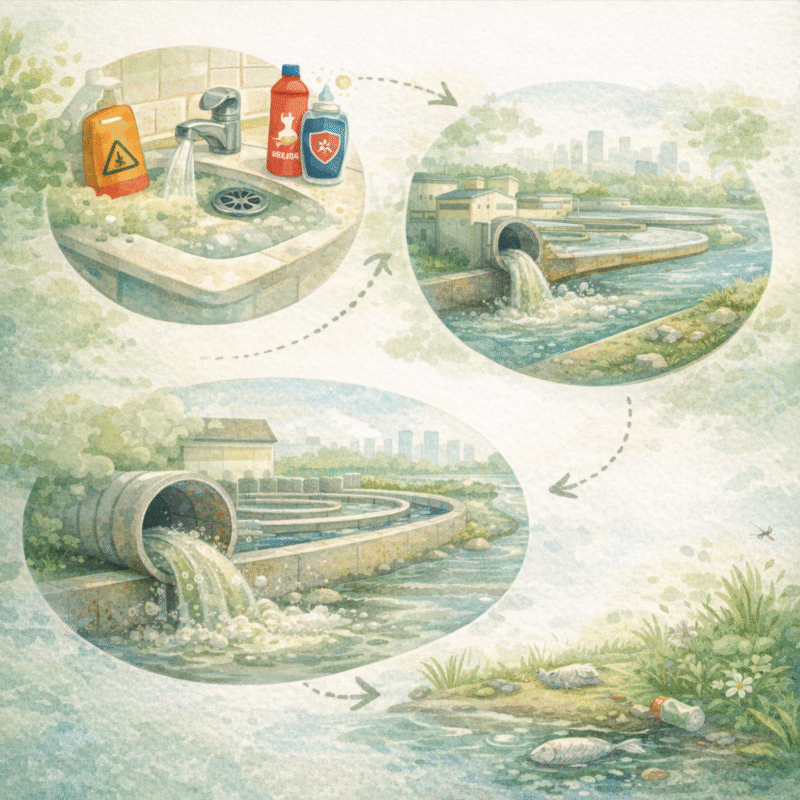
Everything goes down the drain.
After washing dishes, cleaning the bathroom, or doing laundry, the product residue goes down the drain along with the wastewater.
Not everything disappears.
Water treatment plants help a lot, but not all modern chemicals eliminate % 100%, especially when used every day in millions of homes.
3. The cumulative effect
A single house doesn't seem like a problem.
But thousands of homes using the same products, every day, yes they are.
That's where river, sea, and ecosystem pollution comes in.
The most important idea you should remember
Traditional cleaning products make two trips:
 One in the air, which you end up breathing
- Another one in the water, which returns to the planet
And neither of them disappears by magic.
Small changes that make a big difference
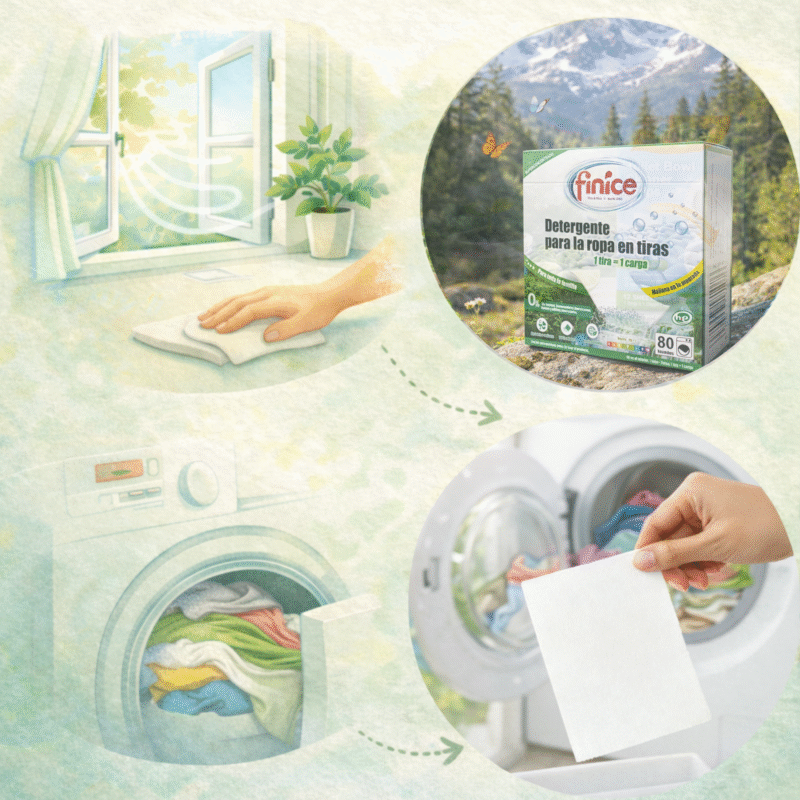
It's not about doing it perfectly, but better.
- Ventilate while you clean
- Avoid heavily fragranced aerosol products
- Use only what you need, no more
- Prioritize smooth formulas y zero waste
Every little change adds up.
Cleaning is also caring
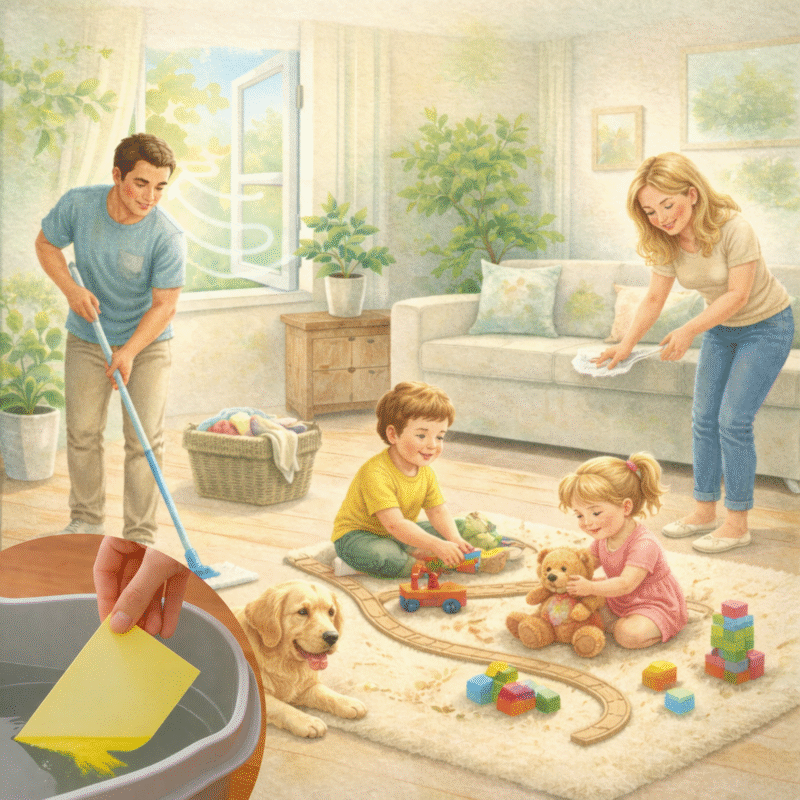
Cleaning shouldn't mean polluting either the air in your home or the planet's water.
Today, there are more respectful alternatives, just as effective and designed to coexist with people, pets, and the environment.
If you're starting to rethink how you clean your home, Start by informing yourself and choosing more conscious options.
Your home, your family, and the planet notice it more than you imagine.