

Blog
📌 Wash in cold: Why does it matter?

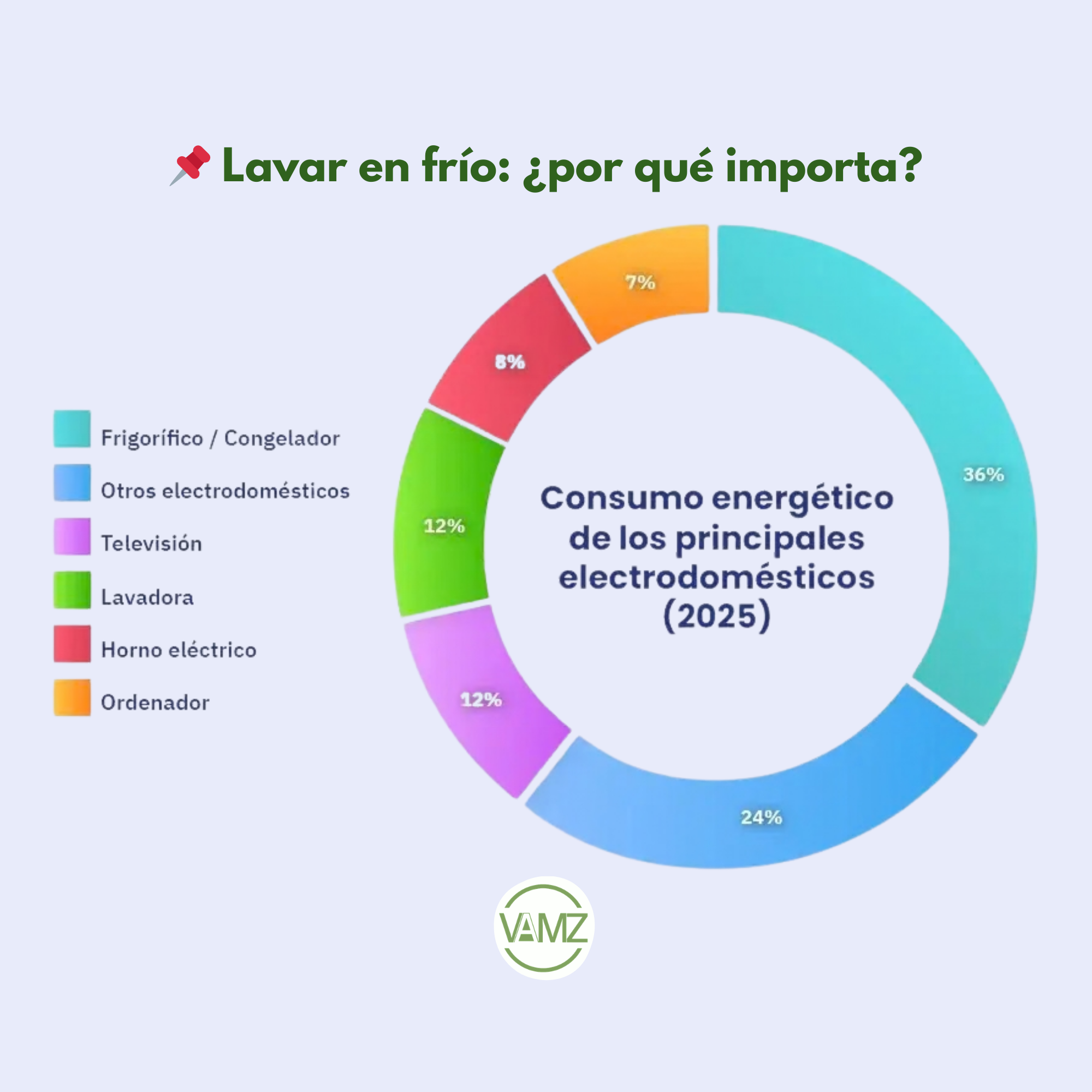
When we think about the washing machine, we probably don't pay attention to how much energy it consumes. But if we do, we discover something interesting: most of the energy in a wash cycle isn't used to move the clothes or spin the drum... but to heat the water.
According to several specialized sources, around 90% of the total energy used by a washing machine during a normal cycle is used to heat water. This has implications for both your electricity bill and your home's environmental impact.

How much can you save?
Although the exact savings depend on your washing machine, the climate, and other factors, different estimates agree that:
- Wash at lower temperatures (e.g., 30 ºC or even cold) it can save up to 601 TP3T of energy per cycle, compared to washing with hot water.
This translates to less kWh consumed, which can be reflected in a reduction of your electricity bill, especially if you wash frequently.
In addition, Current detergents work better and better at low temperatures., so the effectiveness of washing isn't compromised if you choose your products well.

Environmental benefits
Besides saving money, washing in cold also helps the environment:
- Less energy = less CO₂ emissions associated with electricity generation.
- Washing at low temperatures can protect clothing fibers, reducing the speed at which they wear out and therefore delaying the need to replace them.
This means less clothing is thrown away and less demand for resources to make new garments.
🧺 Practical tips to apply at home

Wash with cold water or the lowest temperature practical for your garments.
Check the labels: many fabrics work perfectly in cold.
Use effective cold-water detergents: nowadays there are many that are specifically designed for that.
Prevent overloading the washing machine: this improves wash efficiency and reduces the need for repeat cycles.
In summary
Wash in cold not only Reduce energy consumption, but also protects your clothes, can lower your electricity bill, and has a positive impact on the environment. It's not just about washing better... but about wash more intelligently.
Small changes, big impacts.