

Blog
What is the transport footprint and how do our products reduce it?

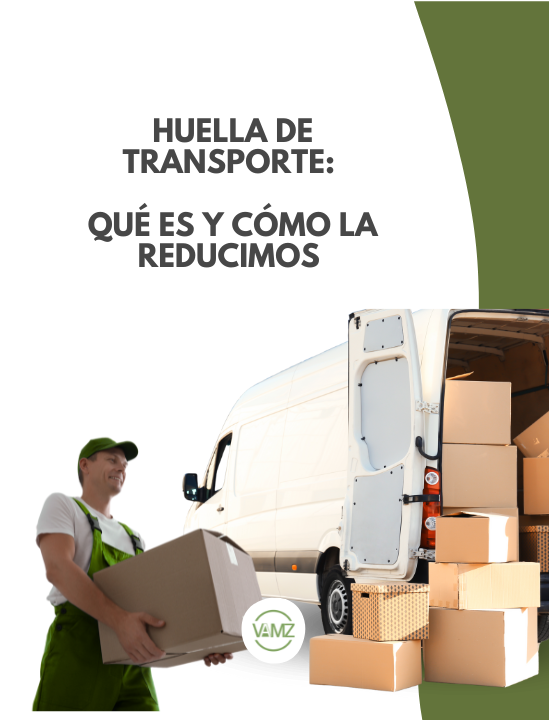
📦The transport footprint It's the part of a product's carbon footprint that comes from moving it from where it's made to where it's used: factory to warehouse, from there to a store or your home.
It depends on three factorsthe distance traveled (kilometers), the mode of transport (truck, van, train, boat, plane) and what weighs and it takes the package.
Simple rule: the less weight and volume per unit, the smaller the footprint per order, especially in the so-called “last mile.”.
🧮How to estimate simply:
Approximate emissions = Weight (in tons) × Distance (in km) × Mode Factor (g CO₂e per t·km).
This “mode factor” varies by transport. To illustrate the method, let's use 100 g CO₂e/t·km as a road example. It is not an absolute figure; it serves to explain the calculation.
Illustrative example (with our calculation assumptions):
– Liquid detergent (2 L): estimated total shipping weight 2.2 kg (product + bottle + box).
0.0022 t × 800 km × 100 g ≈ 176 g CO₂e per unit transported.
- Detergent strips (80 washes): for our calculations, we use 150 g per unit (0.15 kg).
0.00015 t × 800 km × 100 g ≈ 12 g CO₂e per unit.
With these guiding assumptions, the strip format decreases by approximately 90% or more the transport emissions per order. Actual values depend on distances, final weights, and carrier operations.
Why the strip format reduces the footprint:
Ultra-concentrated productWe don't transport water. Same effectiveness with much less mass per wash.
Less volumeThe flat format allows for more units per box and per vehicle, reducing the footprint per unit.
Minimalist packaginglightweight packaging and no heavy plastics. Less material, less weight and less filler.
More efficient operationsThe compact size facilitates storage, order preparation, and better load density on last-mile routes.
Actual weight vs. volumetric weight
Many carriers charge based on whichever is greater: actual weight (what the scale reads) or volumetric weight (what it occupies: length × width × height divided by a coefficient). By occupying very little space, the straps avoid penalties for high volume and improve logistical efficiency per order.
📦And the packaging?
Fewer layers, less filler, and lightweight materials make a difference when you add up thousands of shipments. Plus, we prefer packaging that can go in the correct bin and reduce waste at home.
Practical tips for reducing your transportation footprint:
Choose standard shipping over express whenever you can (it usually optimizes routes and loads).
Group purchases to reduce trips.
– Prefers concentrated products: more uses per kilogram shipped.
Avoid unnecessary returns by carefully reviewing your order before finalizing.
❔Frequently Asked Questions:
Does home delivery always pollute more than buying in a store?
It depends. A well-planned delivery route with full vehicles can be very efficient. The weight/volume per unit, distance, and return rate are important.
Why does the last mile matter so much?
Because there are many stops for few packages, and urban traffic reduces efficiency. A small, light package improves consolidation and load density, reducing kilometers and time per delivery.
🫧Do the strips clean as well as the liquid?
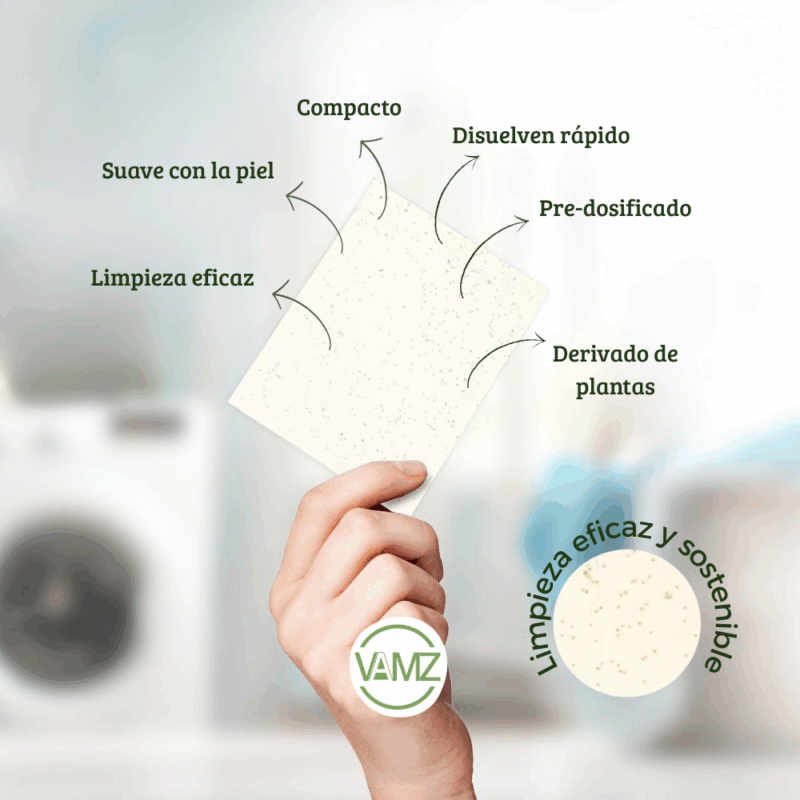
Yes. They are pre-dosed, they dissolve quickly and are gentle on the skin. Their effectiveness-to-weight ratio is excellent, which is why they travel “cleaner” with less impact.