

Blog
Practical Guide: How to Protect Yourself from the Heat These Days

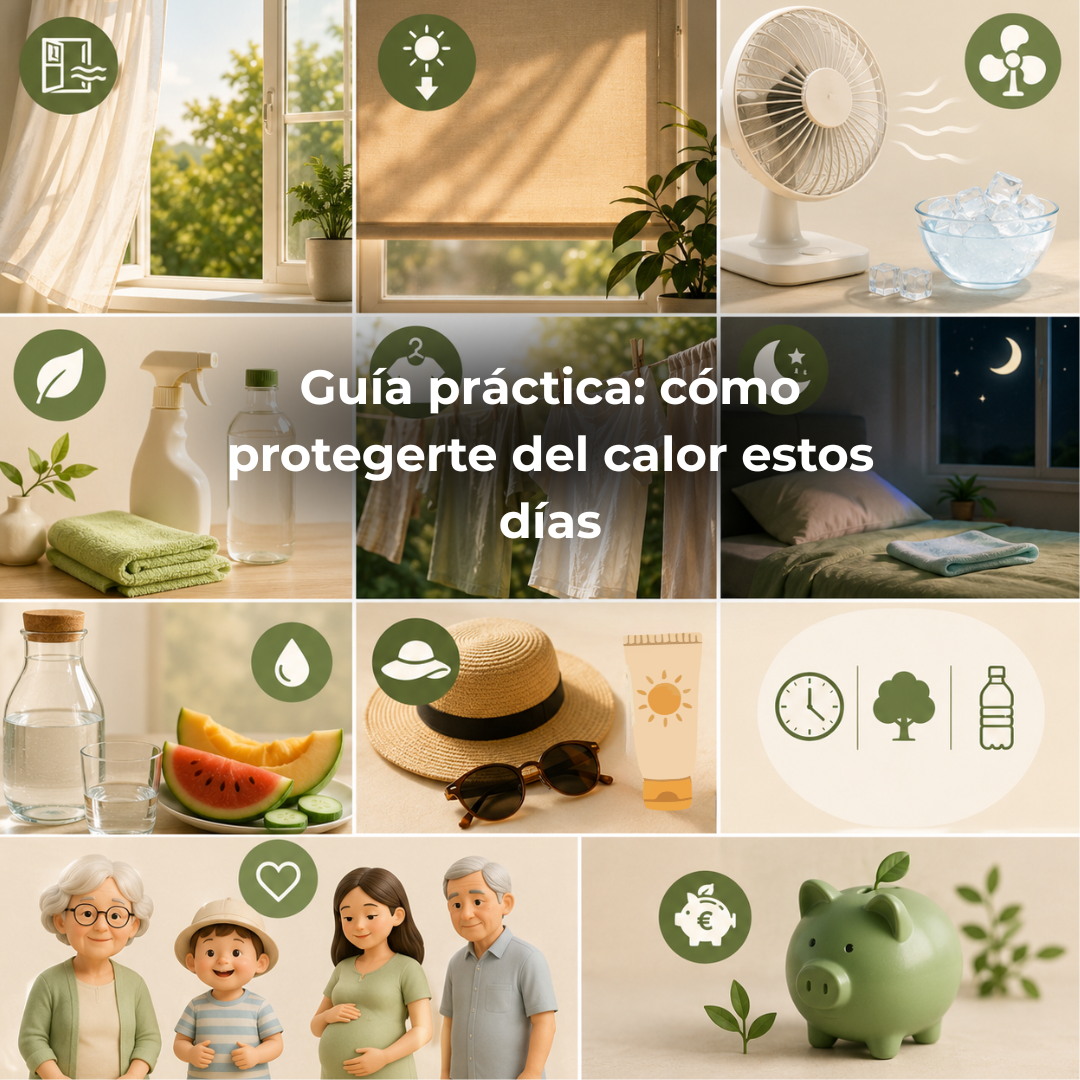
Spain is currently experiencing a heatwave with highs reaching up to 42 degrees Celsius in some areas, along with tropical nights and an extreme risk of forest fires. Here's a simple guide with things you can do at home and outdoors to get through these days with as little suffering as possible.
Home
Ventilate in the morning, close during the day
- Open windows and blinds first thing in the morning (before 10:00 AM), when the outside air is still cool, to ventilate the home.
- From 10:00 AM until sunset (around 8:00 PM), close the blinds and, if you can, the curtains too. This is key: protecting the house from the sun with awnings or by keeping the blinds down significantly reduces heat entry through the windows.
- If you have awnings or exterior blinds, even better: they block heat before it reaches the glass.
Fan vs. Air Conditioner
- The fan uses much less electricity than the air conditioner, so use it as your first option.
- Tip to boost it: Place a bowl or tray with ice (or frozen bottles) in front of the fan; the air it blows out comes out cooler.
- If you use air conditioning, there's no need to lower the temperature too much: 24-26 °C is sufficient and avoids sudden temperature changes with the outside.
Beware of heavily fragranced cleaning products
- With the blinds and windows closed for so many hours, the air is less renewed and strong odors (floor cleaner, air fresheners, heavily perfumed detergents) become concentrated in the house.
- Better to go for eco cleaning products no strong fragrances...avoids headaches, sore throats, or that “heavy” feeling in the air that is more noticeable in the heat.
- If you use bleach or other strong-smelling products, do so during hours when the house is ventilated (before 10:00 AM) and not when everything is closed up.
To sleep better
- A damp sheet or towel (wrung out, not soaking wet) helps lower body temperature through evaporation. You can have one ready in the freezer in a bag for a quick cool-down before sleep.
- Warm (not cold) showers before bed lower your body temperature without causing thermal shock.
- Light bedding (cotton or linen) and a cross-breeze (two points in the house open for air circulation) if the night allows.
Hydration
- Drink water frequently, even if you're not thirsty: staying hydrated by drinking water often is the first recommendation of all public health plans.
- Avoid alcohol and reduce caffeine, as they promote dehydration.
- Fruits and vegetables with high water content (watermelon, melon, cucumber, tomato) help complement hydration.
☀️ When leaving the house
- Avoid the central hours of the day: it is recommended to avoid going out between 1:00 PM and 6:00 PM unless absolutely necessary.
- If you have to go out during those hours, wear a hat, sunglasses, and sunscreen, and seek shade whenever you can.
- Light, loose-fitting, and light-colored clothing.
- Cool off with damp cloths on your neck and wrists if you feel very hot.
⚠️ Pay special attention to…
- Elderly people, infants and toddlers, pregnant women, and people with chronic illnesses or taking multiple medications are the most vulnerable groups to heatstroke.
- Warning signs (heat exhaustion / heatstroke): dizziness, severe headache, hot and dry skin, confusion, nausea. If someone is suffering from heatstroke, they must be taken to the hospital as soon as possible; it is a life-threatening emergency, call 911. While waiting for help, move them to the shade, remove excess clothing, and cool them down with whatever is available.
💡 Bonus: electricity bill
If you use a fan or air conditioning during peak hours, check the cheapest hours on your electricity tariff (if you have PVPC) and concentrate high-consumption appliances (washing machine, dishwasher) outside of those time slots.